Three of the hardest things a person can do: apologise, appreciate, and ask for help.

These are hard to do well, and harder still for people across cultures and identities.
My craft is reading gaps and translating differences into successful communication.
Why?
For peace of mind, and because great innovation happens when people finally get each other.
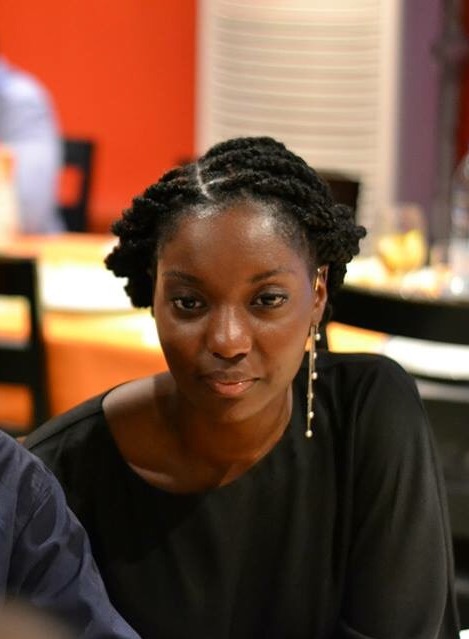
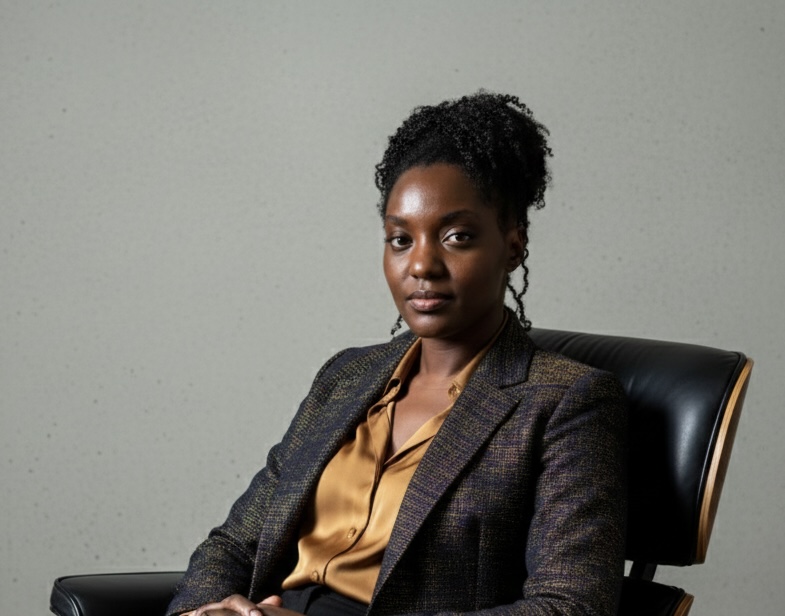
I am Melba.
I have spent years learning how people connect and misread each other.
Currently I partner mostly with people who lead teams, companies, and communities, working through the topics that are too risky to explore inside their own buildings.
The conversations with nowhere else to go.
The higher you rise, the fewer people you can trust with difficult, honest questions. Yet they still need to be talked about and processed.
I sit one to one with senior leaders, outside their organisation, on what they cannot say inside. A director keeps losing their most original people, and suspects the reason is something about the way they lead that no one will say to their face. A chief executive is about to speak to the whole company about race, and knows one wrong word will cost more than silence, with no one inside safe enough to tell them where the language is off. A senior manager caused real harm to someone last year, and every apology they have written since protects them more than it repairs the relationship. A founder keeps postponing their business launch because they feel like an imposter.
What we discuss stays between us.
Most of the leaders I meet are carrying more than they share. The most useful hour in their week is often the one spent thinking out loud, properly, with someone who has no stake in it except getting it right for them.
Almost everything between people turns on three acts, and few of us are ever shown how.
Apologise
To apologise in a way that repairs, without grovelling and without excuse.
Appreciate
To appreciate in a way that is specific and true, without flattery.
Ask
To ask for help without losing your standing.
Doing each one well is part of it. The other part is knowing the person and the culture in front of you. The same gesture carries different weight in a boardroom, a classroom, or another country, and sometimes a thank you reaches someone when an apology would not. That judgement is the real skill, and it can be learned.
Two people ask the same careful question.
The words are the same. The room changes the meaning. The work is learning to read the room, and to adapt without losing yourself.
Companies I lead.

ASM
We help neurodivergent adults and the people they work with understand each other, often by translating between them, and helping to build working lives that fit how each person actually thinks. I am the Managing Director, and ASM is employee-owned.


Nanteza
We give people the words, skills and practice for some of life's hardest conversations, the ones about heritage and skin colour. We work with employers, professionals, individuals and families. I am the founder.
I speak to leaders, schools, and teams about what actually happens between people at work.
Book a conversationThe three acts most of us were never shown effectively: apologising, appreciating, and asking for help.
Why the same behaviour reads as confident in one person and difficult in another, and what to do about it.
Communicating across cultures, classes, and power without losing yourself.
Neuroinclusion that is real; the awkward moments, the wins, the relief, the safety, not just policy.
The conversations about race and heritage that we prefer to avoid.
What I am thinking about.
Follow my writingI write about how people understand each other, and where it breaks down.
One I keep returning to: most of us learned to hide how we think, in order to fit in. That hiding has a quiet cost, in meetings, in classrooms, at kitchen tables. I write about what changes when people stop hiding, and the world around them begins to fit how they actually think.
Some history about how
I got here.





- Education
Three Oxford qualifications: a degree in human sciences, a master's in African Studies, and a diploma in organisational leadership at Saïd Business School, with further study in Interpersonal Skills at Stanford Graduate School of Business, and the Institute of Chartered Accountancy CFAB qualification.
- Founding
Co-founder of SE1 United, a youth-led organisation in South London that we grew to support more than 5,000 young people a year, and closed in 2018.
- Recognition
Recipient of the Diana, Princess of Wales Memorial Award, for improving the lives of others, and the GLE oneLondon award for outstanding contribution to youth work.
- Teaching
Taught in schools across Africa, Asia, and Europe, and led a department, then led a school. Also served as Executive Finance Director and Chief Financial Officer of a leading international school.
- Leadership
Led teams and programmes internationally, across auditing, banking, consulting, education, and social enterprise, including at KPMG and the Rambert Dance Company.
- Now
Managing Director of ASM, an employee-owned company. Founder of Nanteza.
I do this because most of what goes wrong between people can be put right. The same pattern runs from a child at school to a chief executive at work, and the small acts that prevent it can be learned, even though almost no one is taught them.
Let's talk.
Whether you want to work together, schedule a conversation for your event, or to talk through something you are building, tell me what you need and where you are starting from.